
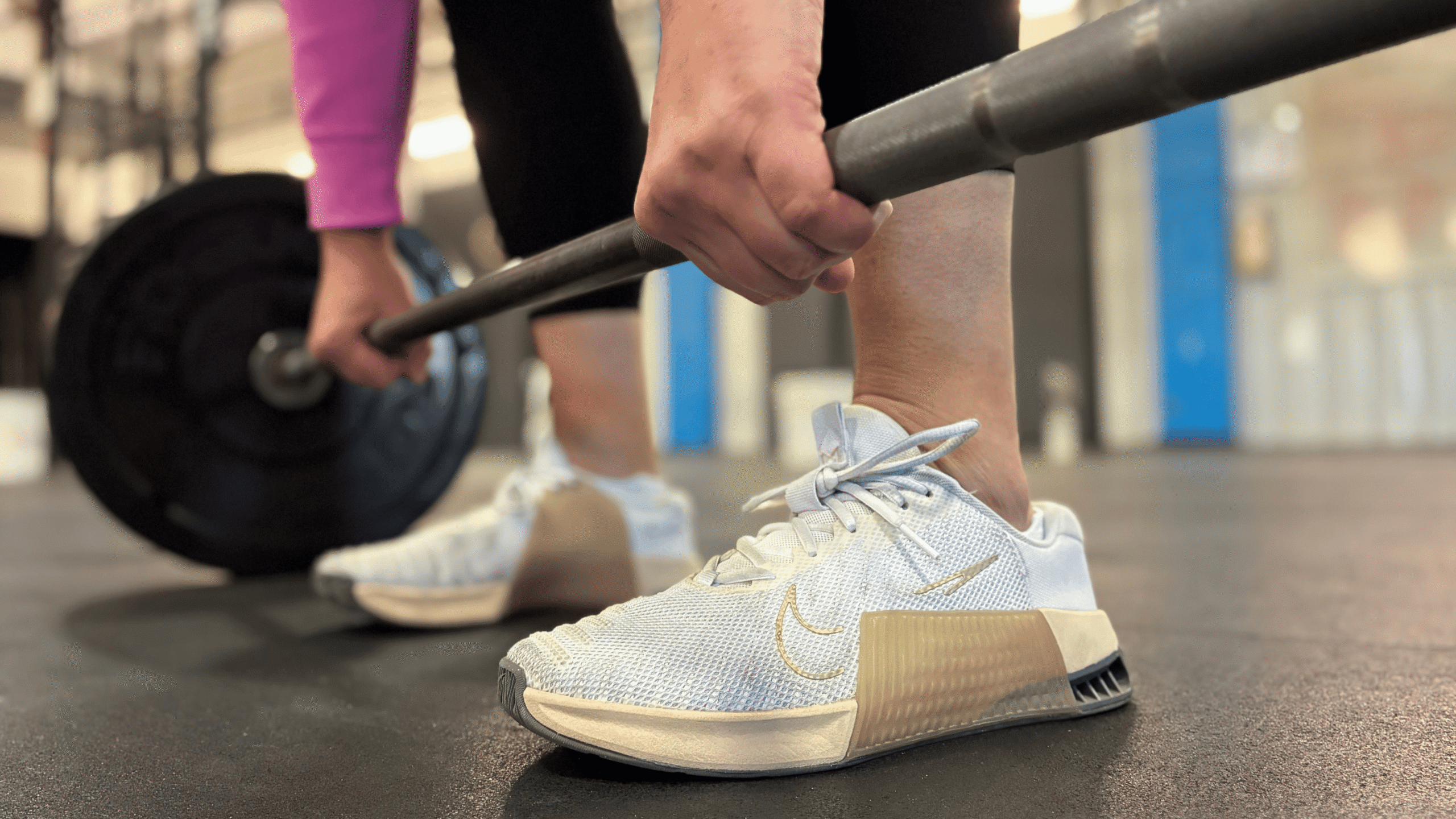
Would you wear ballet pointe shoes to move your couch? Would you wear your lawn-mowing shoes to the Oscars? Shoes have a purpose, and it’s time we gave them some credit. Every foot is different, and every shoe is too.
When it comes to weightlifting and cross-training, there are a lot of options out there. We’ve put together a list of our favorites below, but first it helps to understand why CrossFit shoes are their own category and how to figure out what works for you.
Why CrossFit Asks So Much of a Shoe
In a single workout, your shoes might need to help you squat heavy, sprint, jump onto a box, climb a rope, and slog through a sled push. A good CrossFit shoe has to do a little of everything: support you under a barbell, flex when you run, stay grippy when you change direction, and be comfortable enough that you aren’t kicking them off mid-met-con.
No shoe does it all perfectly, but some get a good balance. And the mismatch matters:
- Too much cushion while lifting can make you wobbly, and a wobbly ankle is a rolled ankle waiting to happen.
- Too stiff while running can put extra strain on your Achilles or shins.
- Not tough enough for rope climbs? They might just fall apart on you.
Your shoes affect how you move, how you feel, and how long they last, so they’re worth a little attention.
What to Look For
Here are the specs worth checking before you buy:
Stability. A flat, firm, dense heel gives you a solid base for squats, deadlifts, and Olympic lifts. Squishy soles are great for a jog, not so much for a heavy back squat.
Flexibility. You still need to move. Look for a forefoot that bends enough for burpees, box jumps, and short runs.
Heel-to-toe drop. This is the height difference between heel and toe. Zero-drop shoes encourage a natural, level stance and posture. A bit of drop (around 8 to 10mm) takes stress off the Achilles, which can be a big deal for long efforts or if that area is cranky. Neither is “right.” It depends on your body and your training.
Toe box and fit. Toes need room to splay for balance, but you also don’t want your foot sliding around inside during lateral movements. Narrow, wide, high-volume, low-volume, flat arches, high arches: all feet are welcome in the gym, and the best shoe is the one that fits yours. If you can, try shoes on before committing.
Traction. You’ll be on rubber mats, wood platforms, and maybe pavement. You want grip that holds on all of them.
Durability. Rope climbs are brutal on shoes. Look for rope guards or tough, abrasion-resistant uppers.
Breathability and weight. Heavy, hot shoes get old fast during a long WOD.
Our Picks
Here’s our quick take on each, including where it shines and where it falls short.
Nike Metcon
A flat, wide base and dense heel make this a secure platform for squats, deadlifts, and Olympic lifts, while tough rubber and rope guards handle rope climbs. Newer models add responsive foam for a bit more forefoot flexibility.
Love: stability, durability, traction. Heads up: stiff for running, a snug toe box for some, and bulkier than minimalist trainers.
Inov-8
Rooted in trail running, Inov-8 is light, nimble, and grippy thanks to specially designed rubber soles. A narrow heel locks down the back of the foot while the wide toe box lets your toes spread.
Love: grip, durability, great ground feedback. Heads up: firmer cushioning isn’t ideal for long road miles, many models run about a half size small, and the heel and midfoot run narrow.
Reebok Nano
One of the original kings of CrossFit shoes and a true jack-of-all-trades. The heel flattens under load for a stable lifting base, the foam has enough pop for jumps and double-unders, and a protective wrap on the midfoot guards against rope climbs.
Love: versatility, breathability, grip, rope protection. Heads up: too heavy and flat for runs over a mile or two, the rigid arch can bother very flat feet, and it isn’t the best at any single thing. Fit has varied between versions, so try a pair on.
GORUCK (Ballistic Trainer and I/O Cross Trainer)
Built for functional fitness, heavy lifting, and rucking, with a dense, supportive midsole and ultra-tough uppers that hold up remarkably well. The 8mm (Ballistic) or 10mm (I/O) drop eases stress on the Achilles, and the wide toe box allows natural splay.
Love: durability, barbell stability, comfort under load. Heads up: stiff for about two weeks of break-in, heavy at over 14 oz, not great for running beyond a mile or two, and the roomy fit can slide on narrow feet.
NOBULL
A flat, stable base and a tough, abrasion-resistant upper that shrugs off rope climbs and burpees, plus a clean look that works in and out of the gym.
Love: durability, stability, easy to wipe clean. Heads up: stiff for running and plyos, a narrow toe box that needs breaking in, warm in long sessions, and a higher price tag.
Flux (Adapt Runner and Adapt Trainer lines)
A zero-drop, wide-toe-box shoe with a breathable, sock-like knit upper and a bit more cushion than traditional barefoot shoes. Great if you care about posture and natural movement, but if Achilles issues are in the mix, a little heel drop may serve you better.
Love: roomy toe box, light and washable, comfortable for daily wear and lighter gym sessions. Heads up: the loose fit can slide on narrow feet, it lacks the structure for heavy lifting or runs over 10 miles, and the zero-drop can mean some calf soreness while you adjust.
Quick Reference
| Shoe | Best at | Watch out for |
|---|---|---|
| Nike Metcon | Lifting stability, durability | Stiff for running, snug toe box |
| Inov-8 | Traction, lightweight agility | Narrow heel/midfoot, runs small |
| Reebok Nano | All-around versatility | Long runs, flat feet, “master of none” |
| Flux | Natural movement, comfort, wide toe box | Heavy lifting, narrow feet, adjustment soreness |
| GORUCK | Durability, heavy lifting, rucking | Weight, break-in, running |
| NOBULL | Durability, stability, style | Price, breathability, running |
Finding Your Match
There’s no single best shoe, only the best shoe for your feet and your training. A few questions to ask yourself:
- Do I lift heavy more often, or run and jump more?
- Do I have a wide, narrow, or flat foot?
- Do I have Achilles or ankle issues that a heel drop might help?
- What does my budget look like?
Many athletes end up with a couple of pairs, one for lifting days and another for cardio-heavy ones. Whatever you choose, give your feet a little thought. They carry you through every rep.
Got a favorite we didn’t mention? Tell us what you wear, and we’d love to hear how it holds up.

